
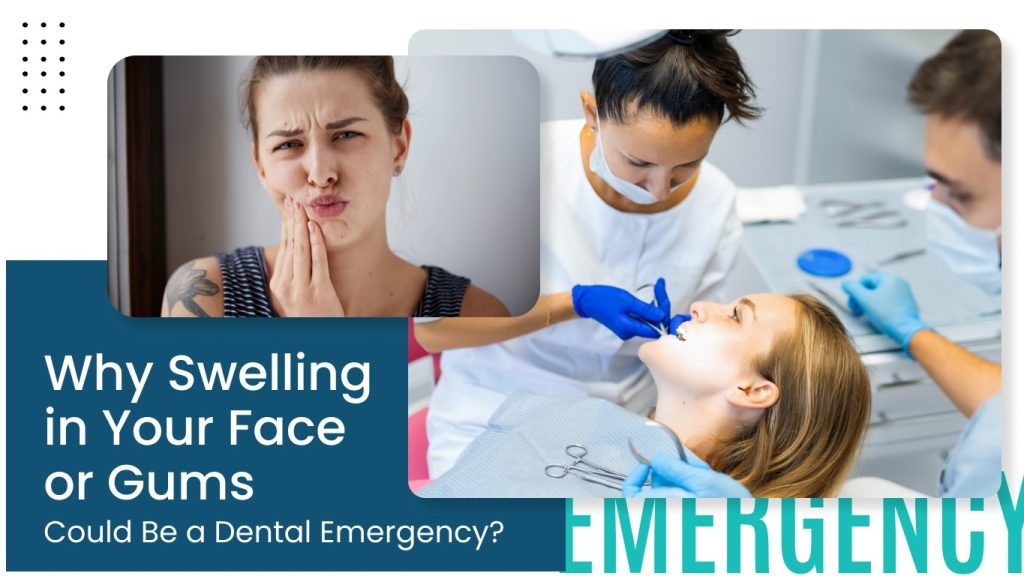
Swelling of the face and gums may appear minor nuisances, but they can indicate severe oral health problems that must be addressed immediately. When your mouth, face, or jaw swells, it is your body’s reaction to infection, trauma, or other dental health issues. Understanding when this swelling is a dental emergency can distinguish between an easy treatment and a life-threatening condition.
Swelling in the mouth area is never a condition to overlook, because it can be a sign of infections that can spread to other areas of your body. The closeness of your mouth to essential body parts such as your airway, brain, and significant blood vessels means that any severe swelling can become a medical emergency that should be evaluated and treated as soon as possible.
Causes of Common Facial Swelling and Gum Swelling
It is essential to understand the different causes of oral and facial swelling so that when it occurs, one can know when to seek professional help. The causes are mild irritations to severe infections that may become life-threatening when not treated.
Infection-Related Causes:
- Dental abscesses – abscesses that occur around the teeth or gums
- Periodontal disease – a severe gum infection that leads to inflammation
- Cellulitis – a severe bacterial infection that travels through the soft tissues
- Infections that occur after dental procedures
- Infection of wisdom teeth, especially impacted teeth
Trauma and Injury-related Causes:
- Bodily harm to the face, jaw, or mouth region
- The complications of tooth extraction that result in dry socket or infection
- Dental procedure complications, such as nerve damage or tissue trauma
- Oral cavity injuries related to sports
- Injury to the tongue, cheeks, or lips by accidental biting
Allergic and Systemic Causes:
- Allergic reactions to dental material, drugs, or food
- Oral autoimmune diseases
- Diseases or obstruction of the salivary glands
- Hormonal changes that influence gum sensitivity
- Side effects of medication that result in gingival overgrowth
The site and nature of swelling may give valuable clues to the cause of the swelling. Swelling around a particular tooth is a sign of an abscess, whereas swelling of the face is a sign of a more serious spreading infection or allergic reaction.
Recognizing a Gum Swelling Dental Emergency
Not every swelling is an emergency, but there are some warning signs that it is an emergency, and it is necessary to seek professional help. Knowing these red flags can help you avoid serious complications and even save your life.
Acute Warning Signs of Emergency:
- Problems with swallowing or breathing because of swelling
- Swelling that spreads fast to the face or neck
- High fever (higher than 101°F) with swelling of the mouth
- Pain that is severe and does not respond to over-the-counter medications
- Foul-tasting or -smelling pus discharge
- Swelling that interferes with your normal opening of the mouth
Symptoms That Need Immediate Treatment
- Swelling that gets worse in 24-48 hours despite home treatment
- Red streaks that lead out of the swollen area
- Face or lip numbness or tingling
- Alteration in vision or severe headache with facial swelling
- The lymph nodes in the neck or under the jaw are swollen
- General sense of illness, weakness, or malaise
Post-Procedure Emergency Signs:
- Overall swelling following tooth extraction that persists and increases beyond 72 hours
- Indicators of dry socket include growing pain and swelling
- Abnormal bleeding or drainage of the extraction sites
- Swelling accompanied by difficulty opening the mouth after dental surgery
When such symptoms appear, particularly in combination, this dental emergency needs to be professionally assessed immediately. The contagious nature of oral infections is such that localized swelling can easily become a systemic menace.
Action: Treatment and Emergency Response
When faced with facial or gum swelling, one should know how to act to avoid complications and achieve the most successful outcome. The intensity of the symptoms will dictate whether you require urgent care or can afford to wait to see a dentist.
Immediate Emergency Measures
Contact your dentist as soon as possible, or visit an emergency room when breathing or swallowing is impaired
- Use cold compresses to lessen swelling (20 minutes on, 20 minutes off)
- Use over-the-counter pain medications as instructed on the label
- Wash lightly with warm salt water to help kill bacteria
- Drink plenty of water and do not consume alcohol and tobacco products
- When you lie down, keep your head up to minimize swelling
Professional Treatment Options
- Antibiotic treatment to overcome bacterial infection
- Drainage of abscesses or fluid collections
- Pain treatment with prescription drugs
- Severe cases or complications are treated by surgical intervention
- Root canal treatment or tooth removal if the tooth is not salvageable
- Hospitalization for Serious spreading infections
Follow-Up Care and Monitoring:
- Frequent checking of the swelling progression
- Completion of prescribed antibiotics despite the improvement of symptoms
- Follow-ups to check that healing is on track
- Change of oral hygiene practices during recovery
- Recognition of the signs that may signal failure of treatment or complications
The important thing in treatment is early intervention. Dental infections are highly contagious, and what might have started as a small swelling of the gums can become life-threatening in hours.
Prevention and Long-Term Oral Health
To prevent the oral health problems that cause emergency swelling cases, paying attention to dental hygiene and visiting a dentist regularly is necessary. The majority of dental emergencies can be avoided by maintaining and early treatment.
Practicing good oral health by brushing, flossing, and visiting the dentist regularly can help you greatly minimize the chances of infections that lead to dangerous swelling. Early treatment can help avoid the development of emergency cases when any dental issues emerge.
Preventive care will help identify and treat issues early before they become severe. Your dentist can detect risk factors, offer preventive care, and teach you about unique warning signs to your oral health care requirements.
Bottom Line
Understanding that swelling of the face and gums may indicate severe dental health issues will help you address the problem in time. Swelling of the mouth area, regardless of the cause (infection, trauma, or complications of tooth extraction), must always be reviewed by a dental specialist to avoid developing potentially dangerous complications and guarantee the best possible results in oral health.
When you need complete dental care and emergency dentistry, Bayswater Dentist can provide routine and urgent care. Their dedication to patient care and their advanced treatment options make them a good choice in ensuring that you have optimal oral health and can address dental emergencies as they come.