
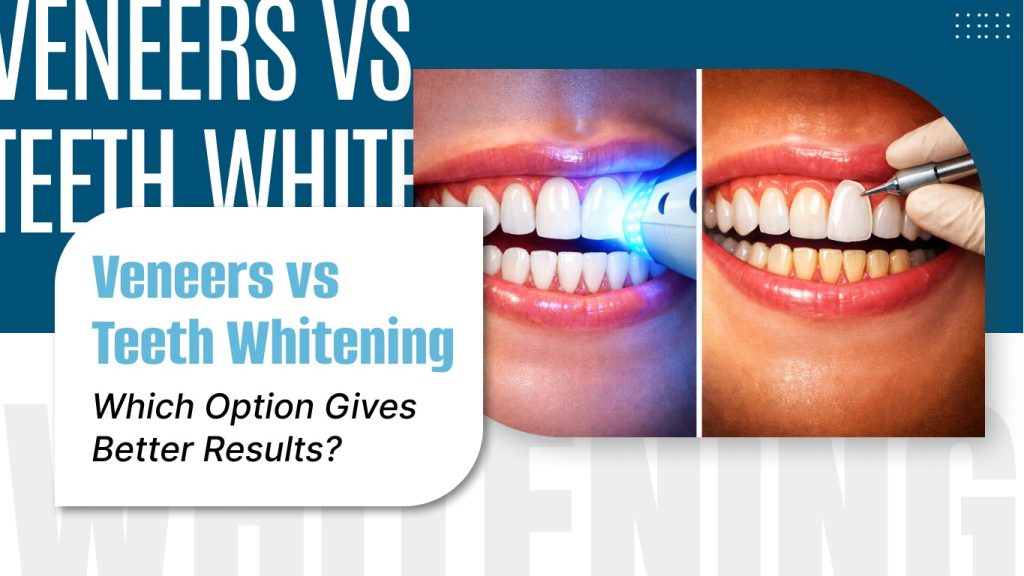
Looking for a brighter smile? You’re not alone. Veneers and teeth whitening are two of the most popular cosmetic dental treatments today. They both have the power to transform the appearance of your smile dramatically. However, they do not work in the same way and do not solve the same problems.
Well, there are several things you should know about each.
Understanding Dental Veneers
Veneers are basically thin shells that cover the front of your teeth. Most are made from porcelain or composite resin. Porcelain ones tend to be the better choice – they last longer and look more natural.
Think of veneers as giving your teeth a complete makeover. They’re not just about colour. These thin covers can change the shape, size, and even fix minor alignment issues with your teeth.
What Makes Veneers Great?
- They fix everything at once. Got stained teeth, a small gap, and one tooth that’s slightly crooked? Veneers can handle all of these problems in one treatment. That’s pretty convenient.
- They last a really long time. With good care, porcelain veneers can stick around for 10 to 15 years. Yes, they cost more up front. But when you think about it as a long-term investment, the math works out better.
- Stains aren’t a problem anymore. Your morning coffee habit? That glass of red wine with dinner? These won’t stain porcelain veneers the way they stain your natural teeth.
- Nobody will know you have them. Well-made veneers look just like natural teeth. Aa7guzg89yh uygytwrihyj eou4l4k6i8tbu8rt kewapi etu w7GF RKU T3YQKHST They have that same slightly translucent quality that real enamel has.
- You see results immediately. Walk out of the dental office with your new smile. No waiting around for results to show up.
- They’re incredibly versatile. Chips, cracks, gaps, crooked teeth, severe staining – veneers can fix all of these issues. Some teeth are just too stained for whitening to help. Veneers work when nothing else will.
Getting Veneers: What to Expect
The process usually takes two or three visits. During your first appointment, the dentist prepares your teeth by removing a small amount of enamel. They’ll take impressions and might put temporary veneers on your teeth.
Your permanent veneers get made in a dental lab. This takes a week or two. Then you come back for your final appointment where they cement the veneers permanently to your teeth.
Professional Teeth Whitening Explained
Teeth whitening does exactly what it sounds like – it makes your teeth whiter. However, professional whitening at a dentist’s office is completely different from those strips you buy at the pharmacy. The results are faster and much more dramatic.
Why Professional Whitening Works Better
- It won’t break the bank. Whitening costs way less than veneers. If budget is a concern, this might be your best starting point.
- No drilling or permanent changes. The dentist doesn’t need to remove any part of your natural tooth. Your teeth stay exactly as they are, just whiter.
- It’s fast. Most in-office whitening takes about an hour to 90 minutes. You can literally do it during lunch break.
- You control how white you go. Want to start subtle? Go dramatic? Your dentist can adjust the treatment to get exactly the shade you want.
- Touch-ups are easy. Results typically last one to three years. When they start to fade, you can get a touch-up treatment. Most people need this every six to twelve months, depending on their habits.
- Perfect for the right candidate. If you have healthy teeth with surface stains from coffee, tea, wine, or smoking, whitening can work amazingly well.
How Professional Whitening Works
Dentists use much stronger bleaching agents than drugstore products. We’re talking about making teeth three to eight shades lighter in one session.
First, they protect your gums with a special barrier. Then they apply the whitening gel to your teeth. Sometimes they use a special light to boost the whitening process. The whole process is pretty straightforward.
Comparing Your Options: The Real Talk
Here’s where things get interesting. There’s no universal “better” choice between veneers and whitening. It really depends on what’s going on with your teeth and what you’re hoping to achieve.
What problems can each solve?
Whitening only handles discoloration. That’s it. Veneers can tackle colour problems, plus shape issues, size problems, minor crookedness, and severe stains that whitening can’t touch.
How long do results last?
Veneers win here – they last 10 to 15 years. Whitening fades after one to three years. But veneers cost a lot more initially.
Can you change your mind later?
Whitening doesn’t permanently change your teeth. Veneers do – the dentist removes some enamel, so there’s no going back.
Maintenance differences
With whitening, you’ll probably want touch-ups every year or so. Veneers just need regular dental cleanings and check-ups.
Treatment limitations
Here’s something important – whitening can’t change the colour of crowns, fillings, or other dental work. If you have these, they’ll stay their original colour while your natural teeth get whiter. Veneers can make everything look uniform.
Recovery time
Whitening might make your teeth sensitive for a few days. With veneers, you need a little time to get used to how your teeth feel different.
Who Should Choose What?
Veneers might be your best bet if: You have really deep stains from medications, injuries, or genetics. Whitening probably won’t help much with these. You want to fix several problems at once. You’re looking for a permanent solution. You drink a lot of coffee or wine and don’t want to worry about staining again.
Whitening could be perfect if: Your teeth are basically healthy with surface stains. You’re a coffee drinker, tea lover, wine enthusiast, or smoker. You want good results without spending a fortune. You prefer treatments that don’t permanently change your teeth.
Sometimes Both Works Best
There are dentists who suggest both procedures. They can recommend whitening to brighten all your teeth first, and then apply veneers to only those teeth that require additional support. This is a cost-effective strategy that provides excellent outcomes.
Making Your Decision
You really need to talk with a cosmetic dentist about your specific situation. They can look at your teeth and help you figure out what makes the most sense.
Think about these things: How bad is the discoloration? Do you have other cosmetic issues? What’s your budget? How much maintenance are you willing to do long-term? What are your habits like?
Your lifestyle matters more than you might think. If you’re someone who drinks multiple cups of coffee every day or enjoys red wine regularly, veneers might give you more predictable results over time.
The Bottom Line
Both veneers and professional whitening can dramatically improve your smile. They just work differently. Whitening is great for healthy teeth that mainly need brightening. Veneers are superior when you have excessive discoloration or when you want to fix several problems.
In any case, you will be required to maintain good oral hygiene and visit the dentist regularly to sustain your outcomes. Investing in your smile can actually improve your confidence levels and quality of life, be it with veneers, whitening, or both.
Take a moment to consider what you wish your smile to be. Then talk to a professional cosmetic dentist. They will assist you in selecting the treatment that will make the best sense to your teeth, your budget, and your objectives.